
A1 level lithuanian language course
This A1 Lithuanian language course is the foundation of Lithuanian language. It is perfect for starting from scratch.
The programme is based on the Common European Framework of Reference for Languages (CEFR) and follows all the requirements for A1 language proficiency used in Lithuania.
The course covers all topics required for the A1 Lithuanian language exam.
Duration: 7 weeks
Lessons: 14 live online lessons
Schedule: 2 lessons per week
Lesson length: 90 or 120 minutes
You will get:
- 14 live online lessons
- Additional learning materials
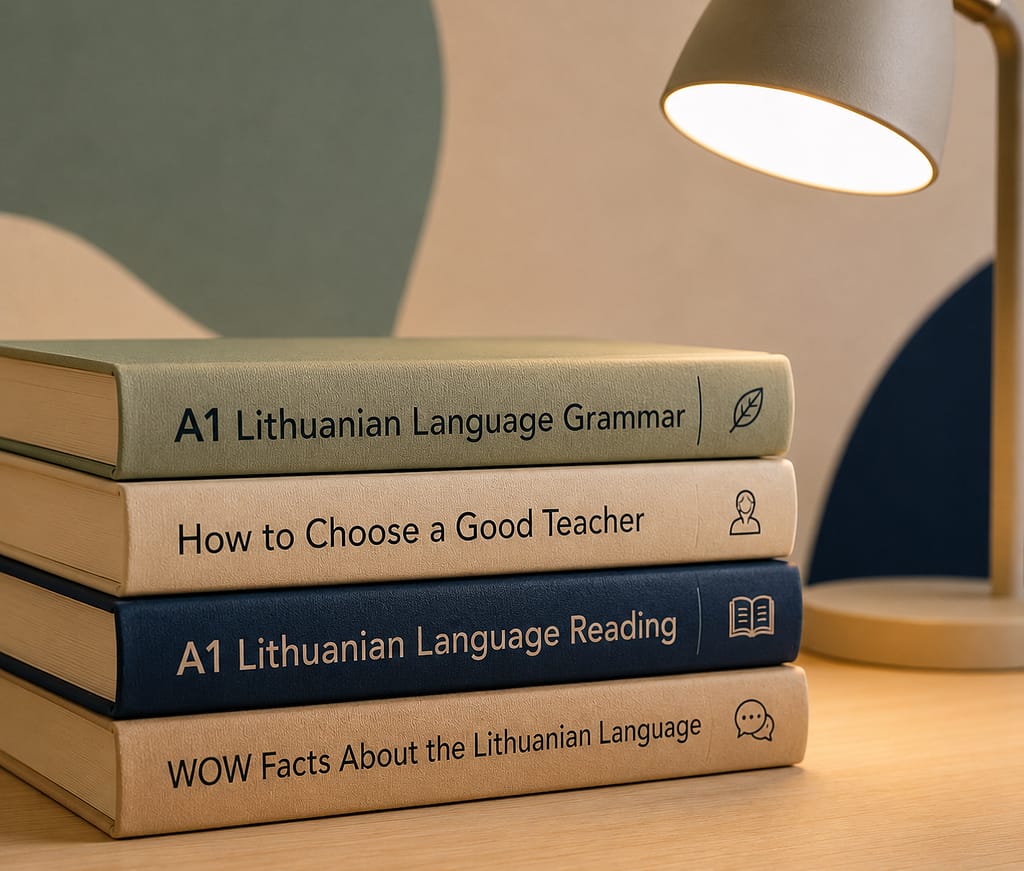
- Course books and worksheets
- Recording of every lesson
- Cultural tips and practical insights about life in Lithuania
- Support from the teacher throughout the course 24/7
You will learn:
- Lithuanian language foundation
- Everyday comunication
- Reading and writing
- Grammar and vocabulary
- Understanding
- Lithuanian culture
- Many everyday topics

Course topics
GRAMMAR AND VOCABULARY
- The most important Lithuanian verbs
- Present, past, and future tenses.
- The most commonly used Lithuanian noun cases.
- Numbers, dates, time, age, and everyday vocabulary.
- Main question words such as kas, ko, ką and others.
SPEAKING CONFIDENCE
- Speak in every lesson through guided conversations and practical activities.
- Pronunciation and listening skills improvement.
- To express likes, dislikes, opinions, and everyday needs.
- Build the confidence to communicate independently in Lithuanian.
TOPICS COVERED
- Personal information
- Family and friends
- Countries, nationalities, languages
- Work and professions
- Home and city life
- Food and shopping
- Transport and travel
- Daily routines
- Free time and hobbies
- Time and dates
READING AND WRITING
- Understand simple messages, signs, advertisements, timetables, and short texts.
- Complete forms and write basic information about yourself.
- Write short messages, emails, and personal introductions.
EVERYDAY COMMUNICATION
- Introduce yourself and talk about your nationality, languages, profession, and place of residence.
- Ask and answer simple questions in everyday situations.
- Talk about your family, friends, hobbies, daily routine, and future plans.
- Order food in a café, shop in a store, ask for directions, and communicate in common real-life situations..